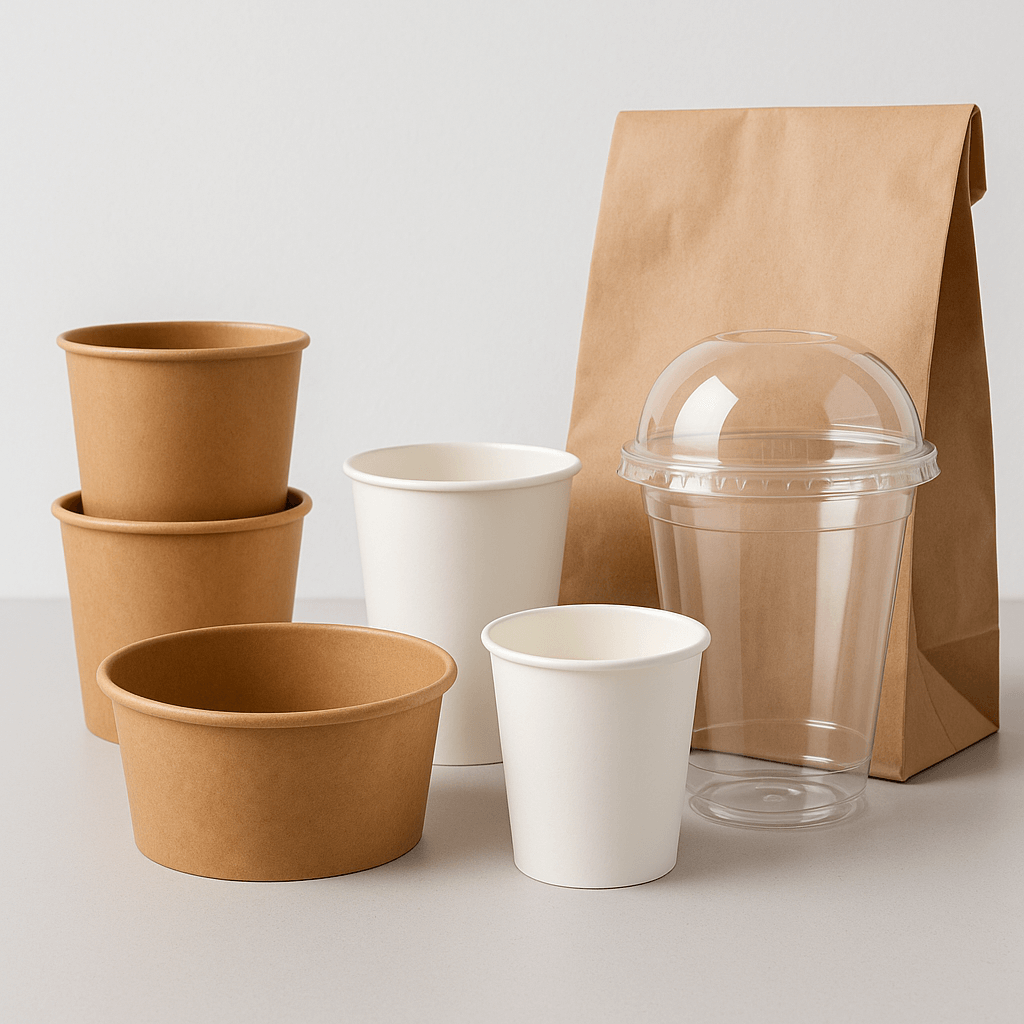
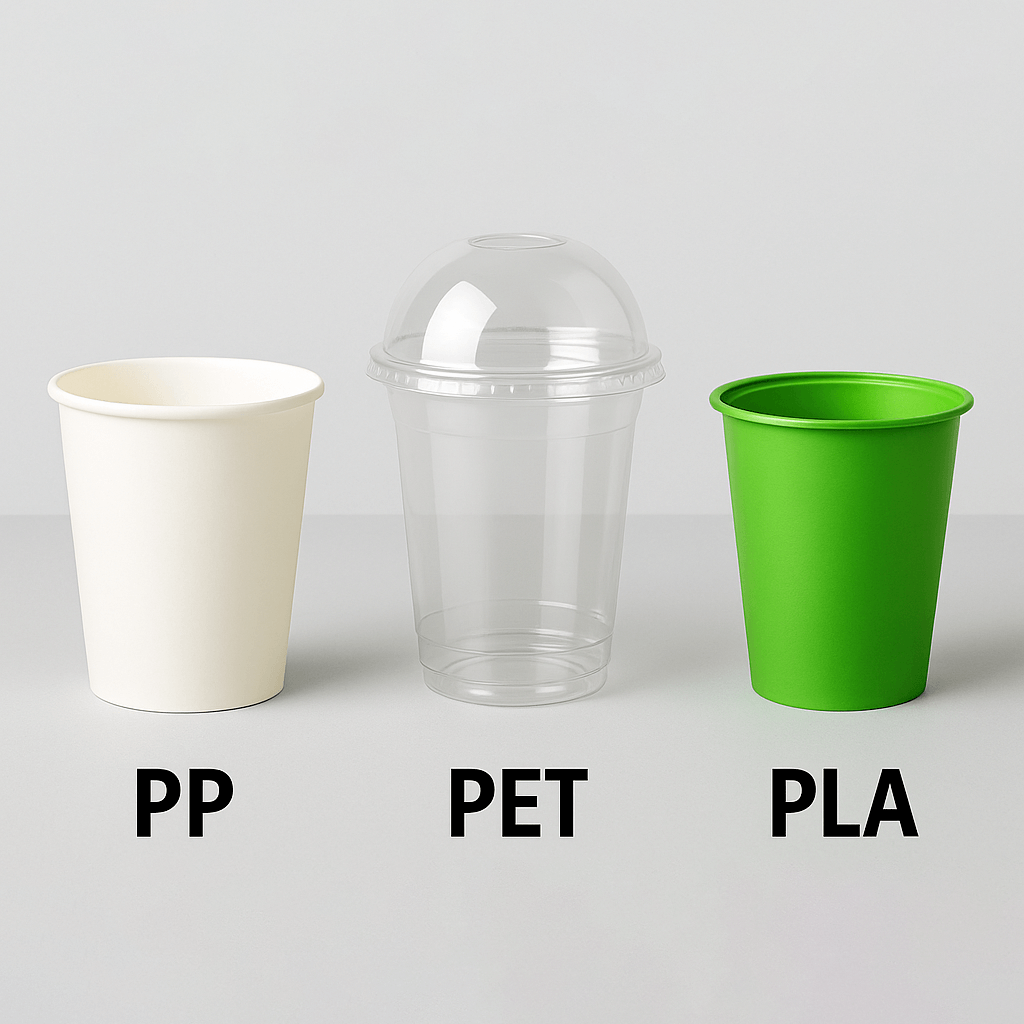
Not all plastic cups are the same. If you’re in the food and beverage industry, choosing the right material for your cold or hot drink cups can affect everything from performance to sustainability and cost. In this article, we break down the key differences between PP (Polypropylene), PET (Polyethylene Terephthalate), and PLA (Polylactic Acid) cups — and help you decide which one is best for your business.
1. PP (Polypropylene) Cups
Best for: Hot drinks, soup, takeout, microwave use
Look & Feel: Semi-transparent, lightweight, flexible
Features:
-
Heat-resistant up to ~100°C
-
Economical and widely used
-
Tough, good for sealing lids
-
Microwave-safe
Considerations:
Not suitable for high-clarity applications or cold-drink visual branding. Not biodegradable.
2. PET (Polyethylene Terephthalate) Cups
Best for: Cold drinks, smoothies, iced coffee, juices
Look & Feel: Crystal clear, glossy, rigid
Features:
-
Great clarity and high-end appearance
-
Strong and shatter-resistant
-
100% recyclable
-
Popular for branding and labeling
Considerations:
Not suitable for hot drinks (can warp); higher cost than PP.
3. PLA (Polylactic Acid) Cups
Best for: Eco-conscious brands, cold drinks, limited shelf life
Look & Feel: Clear, similar to PET
Features:
-
Biodegradable and compostable under industrial conditions
-
Plant-based material (usually from corn starch)
-
Good clarity, suitable for cold drinks
-
Eco-friendly brand image booster
Considerations:
Lower heat resistance (below 45°C); more expensive; limited recycling infrastructure in some regions.
4. Which One Should You Use?
| Material | Best For | Heat Resistance | Eco Score | Cost |
|---|---|---|---|---|
| PP | Hot drinks, takeaway | ✅ High | ❌ | 💰 Economical |
| PET | Cold drinks, clear branding | ❌ Low | ♻️ Recyclable | 💰💰 |
| PLA | Cold drinks, sustainable brands | ❌ Low | ✅ Compostable | 💰💰💰 |
Quick Tips:
-
Choose PP if you sell hot coffee, soup, or need a budget-friendly cup.
-
Choose PET if you want a premium look for your iced drinks.
-
Choose PLA if sustainability is your brand’s key value.
5. Final Thoughts
Each material has its advantages — the best choice depends on your product, your branding, and your customers’ expectations. At Kingospack, we offer all three options and help our clients find the right balance between functionality, budget, and eco-responsibility.